


Introduction: The Call of Stone — Stepping into the Secrets of the Acropolis Museum
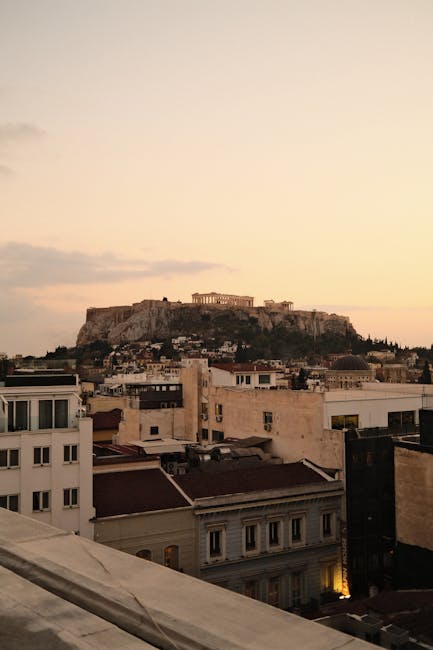
At the heart of Athens, in the majestic shadow of the Acropolis hill, stands the Acropolis Museum (Acropolis Museum / Μουσείο Ακρόπολης): a sanctuary of glass and light built to protect and showcase one of the world’s most precious archaeological collections. Far more than a storage room for ancient objects, this museum tells the story of a city that gave the world democracy, tragic theater and many of Western aesthetics’ founding canons — stone by stone. Hundreds of thousands of visitors come here each year — curious travelers, researchers, art students and sightseers — all seeking a direct encounter with ancient masterpieces and secrets long hidden by the dust of time.
Visiting the Acropolis Museum is first and foremost a sensory stroll: the transparency of the contemporary architecture lets Athens’ light flood in and frames views of the Acropolis, while carefully curated display cases, plinths and labels reflect a modern, educational museography. But the museum also hides less visible secrets: reattributed fragments, contentious restorations, recent finds from excavations, rare inscriptions and traces of everyday life that change how we perceive ancient Greece. The material history — tools, architectural fragments, mutilated sculptures and votive offerings — tells a parallel story to that of the great monuments.
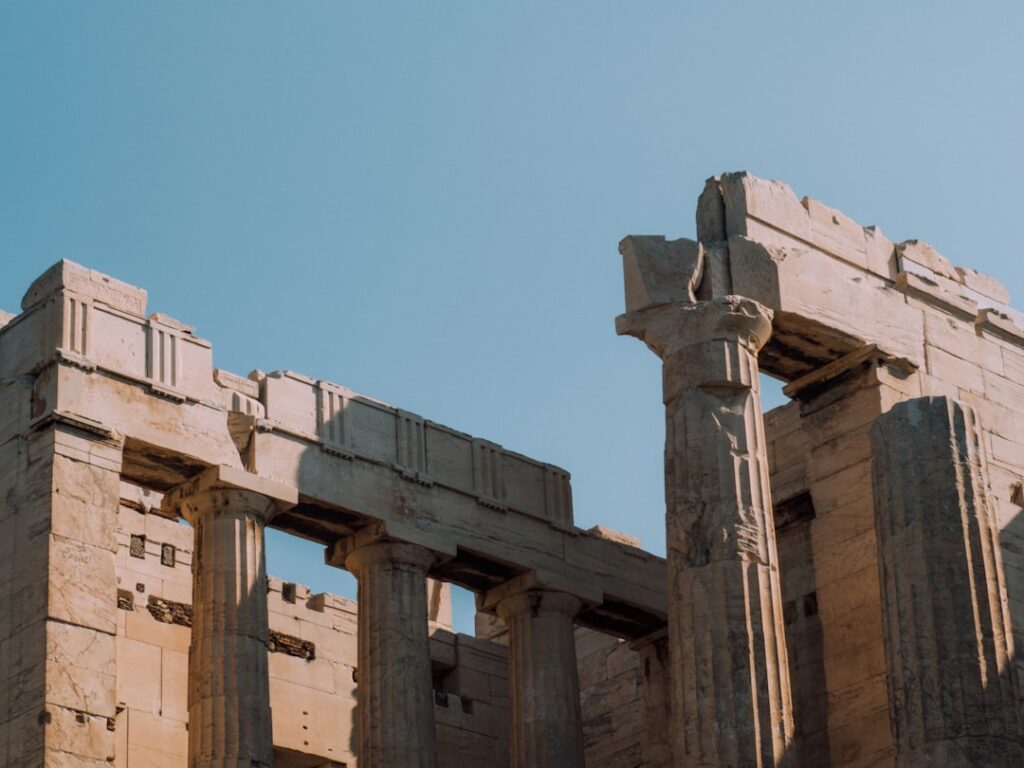
The experience doesn’t stop at the displayed objects: the museum’s very location, right next to the Acropolis and the archaeological site, creates a unique dialogue between past and present. Visitors can, at a glance, compare the originals preserved inside with the remains still on the hill. And there are the behind-the-scenes spaces: storage, conservation labs, photographic archives and provenance files that hold clues about the lives of the works and the history of excavations in Greece. All of this makes the Acropolis Museum a place where history can be read both from the stone and from the acts of conservation and research.
In this article we’ll lift the veil on the collections’ secrets, provide precise practical information — full names of sites and monuments, exact addresses, prices in euros, opening hours — and share local tips to help you get the most out of your visit. Whether you only have an hour to catch the essentials or you’re ready to spend a full day exploring, this guide will lead you to the heart of the works, unpack a few mysteries and offer visual and practical itineraries to discover the splendor of the Acropolis and its museum.
 Click here to book a guided tour of the Acropolis Museum
History and Architecture of the Acropolis Museum: A Design Built for Light
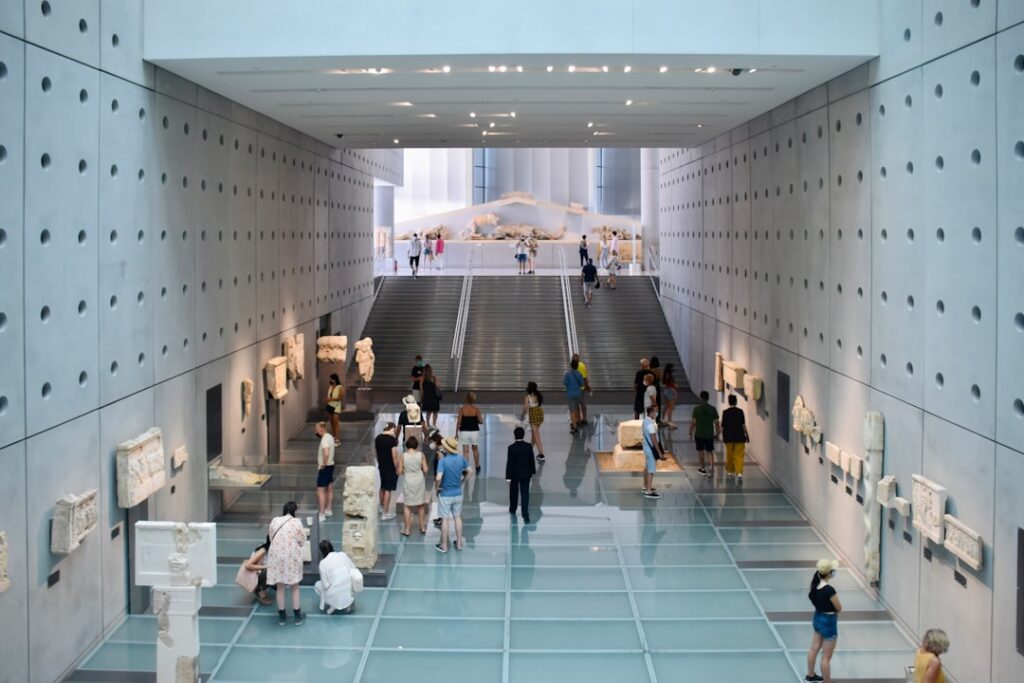
The Acropolis Museum, officially called the « Acropolis Museum (Μουσείο Ακρόπολης) », was designed by architect Bernard Tschumi in collaboration with the Greek firm MÉTAIXMATA. It opened in its current location on June 20, 2009, replacing the old museum lower down on Dionysiou Areopagitou. Exact address: Acropolis Museum, Dionysiou Areopagitou 15, Athina 117 42, Greece. Its siting and structure are intended to create a continuous dialogue between inside and outside: broad glass facades offer direct views of the Acropolis and the hill, while the exhibition levels are organized in a chronological and thematic progression.
The most iconic space is undoubtedly the Parthenon Gallery, a vast room on the top floor where the Parthenon marbles rest on modern plinths arranged to reproduce their original orientation and the light they once received on the Acropolis. Glass floors in some areas allow you to see archaeological remains in situ, while the roof and cladding filter light that changes throughout the day. This staging highlights not only the sculptures’ aesthetics but also their material, patina and the traces of time.
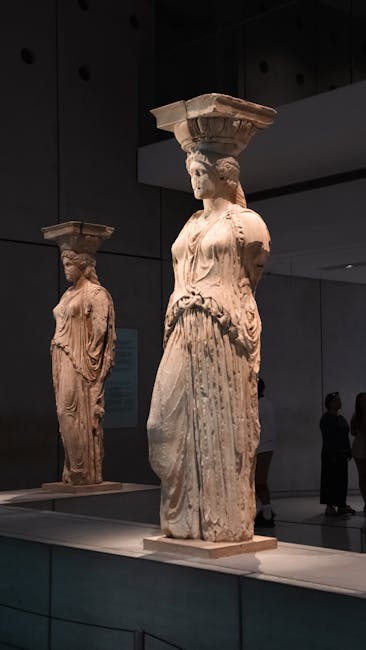
The decision to house the original Caryatids from the Erechtheion indoors rather than leave them exposed to the elements on the hill is one of the museum’s most significant curatorial choices: it’s a balancing act between conservation and visual authenticity. Replicas stand in their place on the Acropolis, while the originals are preserved inside — a confrontation between “in situ” and “protected” that plays a major role in debates about cultural heritage. The museum’s conservation labs are visible to visitors during interventions, a reminder that modern museology blends exhibition with science.
- Address: Acropolis Museum, Dionysiou Areopagitou 15, Athina 117 42, Greece
- Admission: Standard ticket roughly €10 (high season), reduced €5 (low season and special categories). Combined tickets vary.
- Opening hours: typically 08:00 – 20:00 in high season (April–October), 09:00 – 17:00 in low season (November–March). Closed on 25 December and 1 January. Check the official site for holidays and exact times.
Click here to discover the Acropolis, the Parthenon and the museum
Masterpieces Revealed: Parthenon, Caryatids and Lesser-Known Treasures
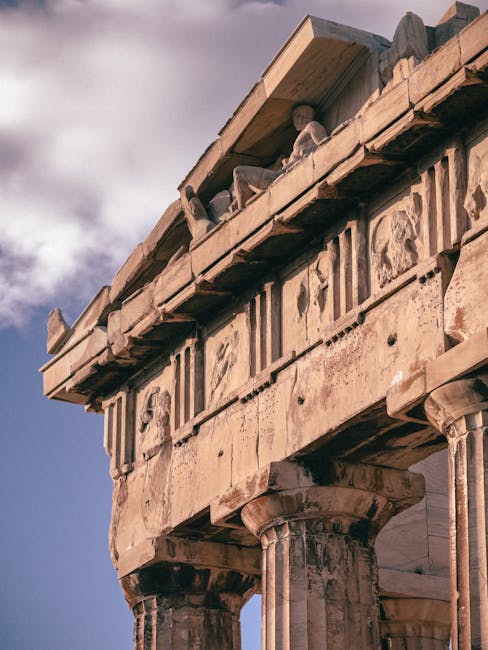
The Parthenon Gallery is often the first stop for visitors — and for good reason: it contains sculptural fragments, metopes, friezes and pediment pieces that showcase the technical mastery of workshops connected to Phidias. Among these treasures, the Parthenon metopes depict mythological combats — centaurs and Amazons — where energy and movement remain visible despite erosion. The Parthenon frieze, displayed in large sections, narrates the Panathenaic procession and allows close inspection of anatomical and clothing details.
The Caryatids from the Erechtheion (those sculpted female columns) are shown in a dedicated room, cleaned and stabilized for conservation. These sculptures fascinate with their blend of grace and structural function. Some of the originals — or parts of them — ended up in the British Museum through historical acquisitions, sparking debates over restitution and provenance. The Acropolis Museum displays the Caryatids preserved in Greece, while replicas continue to stand on the Erechtheion hill.
Beyond the famous items, the museum holds lesser-known but equally revealing objects: ostraca with voting inscriptions (ostraka), fragments of tools, terracotta votive offerings and jewelry. These everyday artefacts let us reconstruct individual trajectories — artisans, merchants, citizens — and better understand Athenian society. Small figurative votive offerings offer a window into popular beliefs, while official inscriptions shed light on civic administration.
Practical tip: for a richer visit, pick up an audio guide (available in several languages) or book a themed guided tour. Expect to spend at least 90 minutes in the Parthenon Gallery and associated rooms if you want to read the labels and study the details. Photography fans will find unique vantage points toward the Acropolis from the museum’s glass walkways — aim for the morning for soft light and late afternoon for golden tones.
Click here to book a guided Acropolis tour with skip-the-line ticket
Provenance, Controversies and Restitutions: Tracing the Journeys of the Works
The Acropolis Museum is not just an exhibition space; it’s also a center for provenance research. Since the 19th century, the history of excavations in Greece has been marked by the export of objects to major European and American collections. Some Parthenon pieces, acquired at times when legislation was inconsistent, are now at the center of international restitution debates. The museum documents these histories, presents archives and argues that having the originals in Greece allows for an unparalleled contextual reading.
One of the most sensitive cases involves the Parthenon marbles moved to the British Museum in the early 19th century. Arguments for restitution mix ethical, cultural and scientific considerations: reuniting the marbles in Greece would allow a complete reading of the frieze and metopes in their original orientation relative to the monument. Other cases concern pieces scattered across private collections or lesser-known museums. Through temporary exhibitions and publications, the Acropolis Museum contributes to international discussions about the circulation of cultural property.
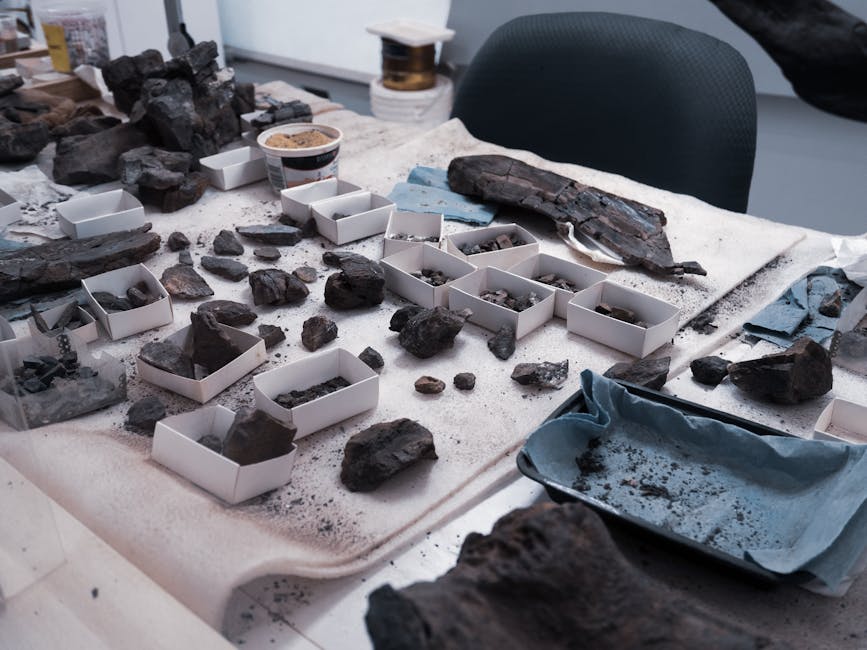
The museum also maintains an extensive documentary archive and restoration workshops where the traces of interventions are visible. These labs are occasionally open to the public during special days or guided visits, allowing visitors to observe modern conservation techniques: fragment consolidation, cleaning treatments, analysis of limestone and residual pigments. These operations often reveal microscopic details — tool marks, fingerprints of craftsmen, ancient retouches — that deepen our understanding of ancient artistic production.
Practical tip: if you’re particularly interested in controversies or research, check the museum’s temporary exhibitions and public lectures. The scholarly publications sold in the museum shop (Acropolis Museum Shop, Dionysiou Areopagitou 15) are valuable resources. Also, always respect the photography rules in the galleries (some areas prohibit flash) to protect the fragile surfaces of the sculptures.
Click here to join a guided tour of the Acropolis Museum
Visiting the Acropolis and Surroundings: Complementary Routes and Practical Advice
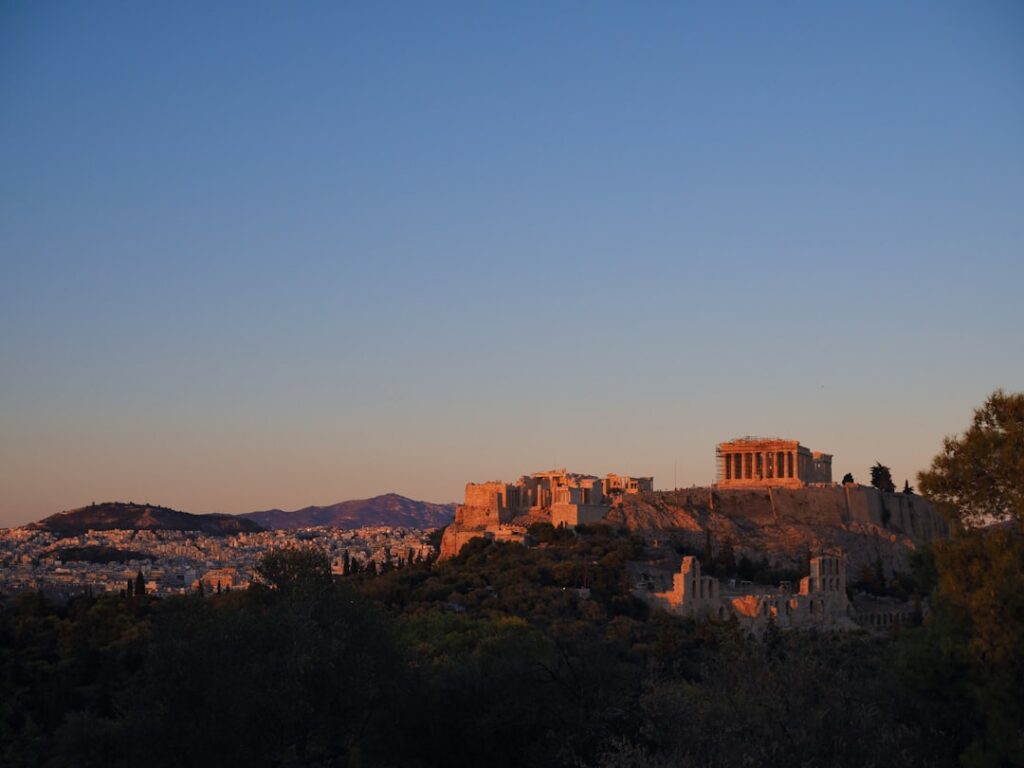
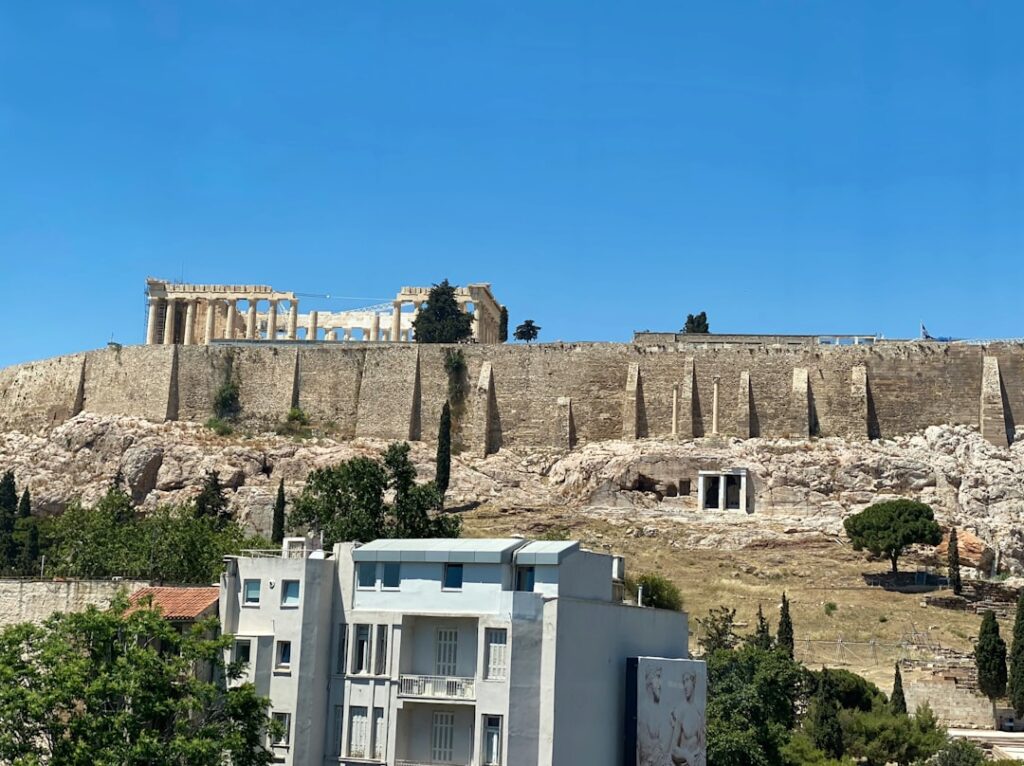
Your visit to the Acropolis Museum is best enjoyed combined with a walk up the Acropolis hill and discoveries of the nearby museums and monuments. Archaeological site address: Acropolis of Athens, Athens 105 58, Greece. The ticket for the Acropolis site usually costs €20 in high season and €10 in low season; there are also combined tickets that include the Roman Agora, the Ancient Agora, the site of Hephaesteion, Hadrian’s Library and Filopappou Hill (check updated prices on the official Greek archaeology site).
Acropolis opening hours: typically 08:00 – 20:00 in high season (April–October), 08:00 – 17:00 in low season; closing times can vary due to weather or special events. To avoid crowds and heat, aim for an early-morning ascent (or late afternoon for the light) and wear comfortable shoes — the stones are uneven and sometimes polished by centuries of footsteps. Bring water, a hat and sun protection — shaded spots are limited.
In the immediate vicinity of the museum, don’t miss:
- Areopagus (Areios Pagos): a rocky outcrop with panoramic views over Athens and the Theatre of Dionysus; excellent for sunset. Address: Areopagus, Athens 105 58.
- Theatre of Dionysus: an archaeological site at the foot of the Acropolis, where the tragedies of Aeschylus and Sophocles were staged. Address: Dionysiou Areopagitou, Athens 117 42.
- Plaka: the historic neighborhood of terraces, narrow cobbled streets, tavernas and artisan shops. General address: Plaka, Athens 105 58.
Local tips: book your museum and Acropolis tickets online if you travel in high season — the ticket desks can get crowded. Arrive via the pedestrian promenade Dionysiou Areopagitou (Dionysiou Areopagitou Street), which runs alongside the site and museum and eases you into the historic atmosphere. For transport, the nearest metro station is Acropolis (Line 2), a few minutes’ walk away. If you take a taxi, tell the driver « Acropolis Museum, Dionysiou Areopagitou 15. »
Click here to explore the Acropolis and the Plaka neighborhood
Services, Detailed Prices and Tips for a Successful Visit
The Acropolis Museum offers a range of visitor services for comfort: a shop (Acropolis Museum Shop) selling reproductions, publications and souvenirs; a café/restaurant on the ground floor with a terrace facing the Acropolis (Acropolis Museum Café-Restaurant); cloakrooms, accessible toilets and elevators for visitors with reduced mobility. The shop and café share the museum’s address: Dionysiou Areopagitou 15, Athina 117 42.
Here’s a quick rundown of typical prices for guidance (check before you go as rates can change):
- Standard Acropolis Museum ticket: around €10 (high season)
- Museum reduced ticket: around €5 (students, seniors, low season and specific categories)
- Standard Acropolis site ticket: around €20 (high season)
- Reduced Acropolis ticket: around €10 (low season and specific categories)
- Combined tickets: vary; online ticketing often offers packages including several archaeological sites
- Audio guide: price varies (often around €5–8)
Typical museum hours (general):
- High season (April–October): 08:00 – 20:00
- Low season (November–March): 09:00 – 17:00
- Closures: 25 December, 1 January. Some public holidays may alter opening times; consult the Acropolis Museum’s official site.
Practical tips:
- Book online to skip queues; print or keep your digital ticket on your phone.
- Arrive early in the morning to enjoy softer light and fewer crowds. The busiest hours are usually between 10:00 and 15:00.
- If visiting in summer, combine the museum (cool, air-conditioned and shaded) in the morning with the Acropolis in the late afternoon.
- The museum shop is a good source for specialized publications; if you’re after facsimiles, buy them there instead of generic tourist trinkets.
- Respect conservation rules: no flash photography on sculptures, don’t touch works and stay behind barriers.
Click here to book the museum and Acropolis afternoon visit
Additional Practical Information
Accessibility: the museum is designed to welcome visitors with reduced mobility, with elevators, ramps and adapted toilets. Strollers are allowed but there may be temporary restrictions during certain exhibitions.
Languages and information: staff often speak English and Greek; labels are generally bilingual (Greek/English). Guided tours in several languages are available by reservation.
Security: for the collections’ safety and conservation, some objects may be temporarily removed for preservation or restoration. Check gallery inventories during your visit so you don’t miss an item on loan or in transit.
Conclusion: Between Stone and Light, Rediscovering Athens’ Soul
The Acropolis Museum is much more than a museum: it’s a narrative device that stages Athens’ long story through its stones, fragments and figures. Each room is a chapter, each case a window onto past lives. From the Parthenon Gallery to the Caryatids, from conservation labs to provenance archives, the museum gradually reveals the layers of a civilization whose influence endures. But it is also the theater of contemporary questions: what place should restitution have? How do we balance conservation with public display? How can we pass heritage to future generations without freezing it?
For the visitor, a day devoted to the museum and the Acropolis offers a complete experience: from monumental masterpieces to the poetry of fragments, from city panoramas to the scented alleyways of Plaka. The practical details — exact addresses, prices in euros, opening hours — make planning a tailored itinerary easier. The local tips (booking, best times to visit, recommended gear) ensure a calm, rewarding discovery.
Ultimately, it’s not just the sculptures or inscriptions that make the collections’ secrets, but the visitor’s ability to connect with them: to observe, compare and question. Athens uniquely juxtaposes millennial remains and modern life; the Acropolis Museum sits precisely at that interface, where present light illuminates the forms of the past. Whether you’re a curious traveler, an art-history student or a casual stroller, let yourself be guided by the clarity of the galleries, the murmur of the stones and the perspectives they offer — an invitation to rethink Antiquity not as a frozen era but as a living, ever-renewing conversation.